
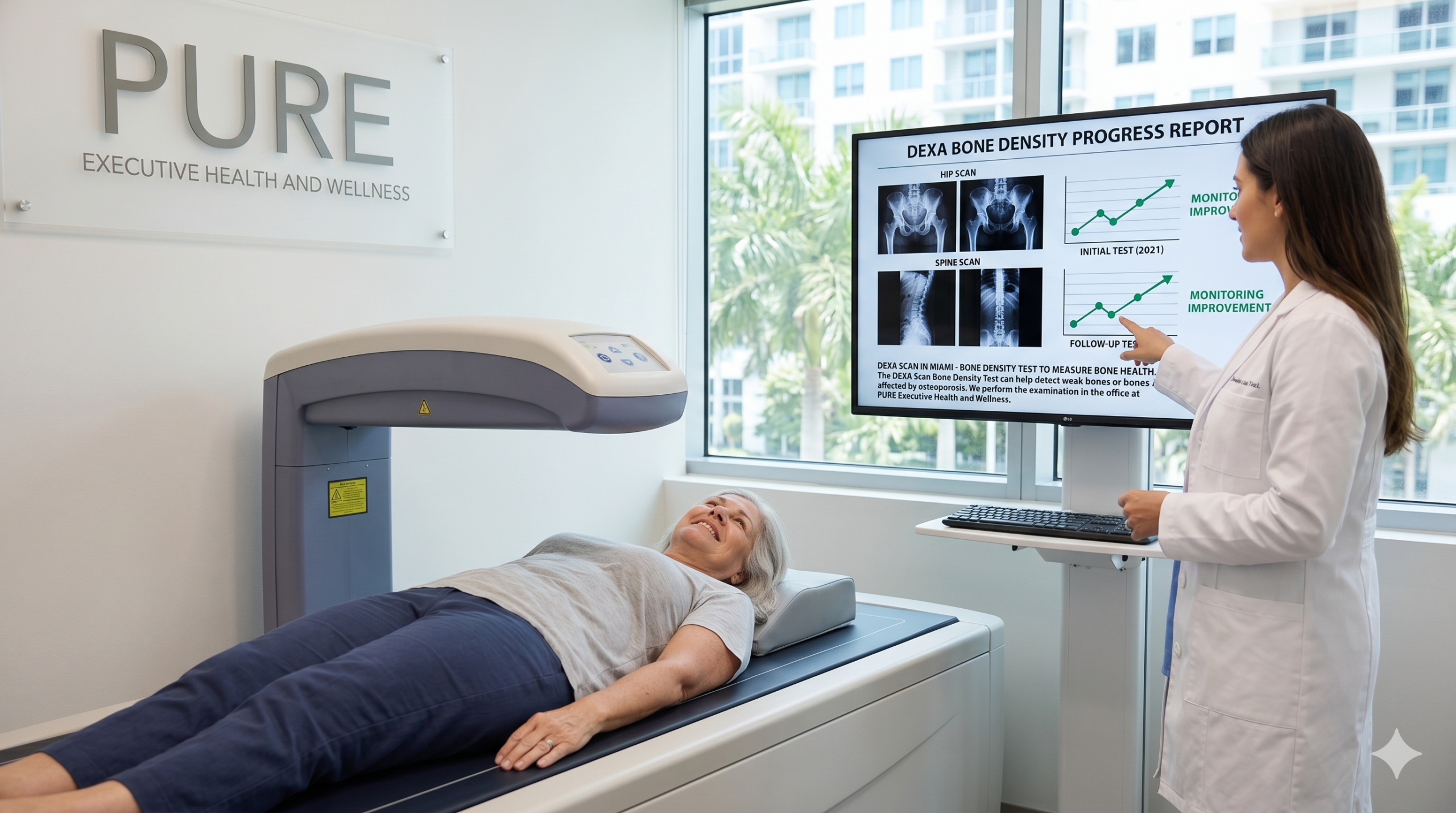
Monitor the Improvement of Your Osteoporosis with Dexa Bone Scans
Introduction
This page provides a comprehensive overview of DEXA scans for osteoporosis monitoring, specifically for individuals concerned about bone health or at risk for osteoporosis. A DEXA scan (Dual-Energy X-ray Absorptiometry) is a quick, non-invasive imaging test that measures bone mineral density (BMD) and provides a highly accurate breakdown of body composition. Early detection and regular monitoring with a DEXA scan can help prevent fractures and improve long-term health outcomes by enabling timely intervention and effective management of osteoporosis.
DEXA SCAN IN MIAMI – BONE DENSITY TEST TO MEASURE BONE HEALTH
The DEXA scan Bone Density Test can help detect weak bones or bones affected by osteoporosis by measuring the amount of calcium in bones as part of assessing bone mineral density. Bone density tests, also known as DEXA scans, measure the amount of calcium in bones and are the standard method used to diagnose osteoporosis by assessing bone mineral density (BMD), which is crucial for predicting fracture risk. It is a quick, non-invasive test, also known as Dual-Energy X-ray Absorptiometry, that specialists use to evaluate bone strength and predict fracture risk. We perform this global medical gold-standard examination in the office at PURE Executive Health and Wellness.
WHAT IS A DEXA SCAN BONE DENSITY SCAN TEST IN MIAMI?
DEXA stands for Dual-energy X-ray absorptiometry, a form of bone densitometry. A DEXA scan uses low-energy X-rays from two different sources directed at the bones being tested, usually takes 10 to 30 minutes, and is non-invasive and painless. The denser the bone is, the fewer X-rays get through to the detector. Having the two different X-ray sources greatly improves the accuracy in measuring the bone density.
The DEXA Scan Miami Bone Density Test at PURE Executive Health and Wellness measures the density of your bones, specifically in the hips and spine. Specialists may also test on the wrist, heel or finger. These are the most common locations for bone fractures.
The DEXA Scan machine sends dual X-rays to the hips and lower spine because these weight-bearing areas are especially vulnerable to fractures. The amount of X-rays that comes through the bone from each of the two X-ray sources is measured by a detector. A computer then calculates a score of the average density of the bone. Depending on the thickness of the bones, this measurement will vary from patient to patient. The radiation dose is very low, less than 1/10th of a standard chest X-ray or about two days of normal background exposure. Pregnant patients should tell their healthcare provider before the scan. Results include a t score and Z-score, which compare your bone density with a healthy young adult at peak bone mass and with an age-matched population. A T-score of -1.0 or higher is normal, between -1.0 and -2.5 indicates low bone mass, and -2.5 or lower indicates osteoporosis.
Bone density testing is especially important for individuals with medical conditions that affect bone health, such as inflammatory bowel disease or celiac disease, which can impair nutrient absorption and lead to low bone density. Additionally, certain medicines and other medications can contribute to bone loss, making regular monitoring crucial for these patients.
A whole-body DEXA scan can also provide a detailed breakdown of body composition, including fat distribution and muscle mass, which offers valuable insights into overall health beyond bone density alone. This comprehensive data helps healthcare providers tailor treatment plans more effectively.
DEXA scans are recognized and recommended by leading organizations such as the Osteoporosis Foundation, the Radiological Society, and institutions like the Cleveland Clinic. These endorsements highlight the scan’s reliability and importance in managing bone health.
The DEXA scan is not only a diagnostic tool but also a preventive measure. Early detection of decreased bone density allows patients and healthcare providers to implement lifestyle changes and medical interventions before fractures occur. This proactive approach can significantly reduce the risk of debilitating fractures, especially in the hip and spine, which are associated with increased morbidity and mortality.
Moreover, the DEXA scan plays a vital role in research and public health by contributing data to national libraries and databases that track bone health trends across populations. This information aids in developing better prevention strategies and treatment guidelines.
In addition to measuring bone mineral density, the DEXA scan provides information about visceral adipose tissue (VAT), a type of fat stored around internal organs. Elevated VAT levels are linked to higher risks of cardiovascular and metabolic diseases. Therefore, the DEXA scan offers a more bone-centric and holistic view of a patient’s health status.
WHAT TO EXPECT DURING A DEXA SCAN BONE DENSITY TEST?
At PURE Executive Health and Wellness, the scan normally lasts between 10 to 20 minutes. Bone density tests are commonly recommended for women over 65, men over 70, and younger people with risk factors such as low body weight or a family history of osteoporosis. There is no need for any special preparation prior to a DEXA scan. You will be asked to dress in a gown and remove all metals. Patients lie still on a completely open X-ray table, and the bone density scanner passes over the patient’s body. There are no closed tunnels or rings. Ask your healthcare provider whether screening is appropriate for you.
A DEXA Scan Bone Density Test is painless and minimizes the amount of radiation a patient experiences with low-radiation X-rays. When the test is complete, patients can return to work, home, and their daily lives. This test is highly valued for its quick procedure time and non-invasive nature, making it accessible and convenient for patients of all ages. The low radiation dose involved is comparable to just a couple of days of natural background radiation exposure, ensuring patient safety during repeated scans if necessary.
The test’s precision allows healthcare providers to detect subtle changes in bone density over time, which is crucial for monitoring osteoporosis progression or improvement. Additionally, because the DEXA scan can assess body composition, including fat and muscle mass distribution, it serves as a comprehensive tool for evaluating overall health, not just bone strength.
Patients undergoing the scan are positioned comfortably on the scanning table, and the procedure does not require any recovery time or special aftercare. This ease of use encourages regular screening, especially for individuals at higher risk of bone loss, such as postmenopausal women, older adults, and those with medical conditions affecting bone health.
Furthermore, the painless nature of the DEXA scan helps reduce anxiety associated with medical testing, making it easier for patients to comply with recommended screening intervals. This compliance is vital for early detection and effective management of osteoporosis, ultimately helping to prevent fractures and maintain mobility and quality of life.
A bone density test differs from traditional bone scanning. A bone scan requires an injection prior to the analyzation. Doctors customarily use this examination to enable their detection of certain fractures, cancer, infections, and other potential abnormalities within the bone. In contrast, a DEXA scan focuses specifically on measuring bone mineral density without the need for injections or contrast agents, making it a less invasive and quicker procedure. This distinction is important because while traditional bone scans provide detailed images of bone metabolism and abnormalities, DEXA scans offer precise quantitative data on bone strength and fracture risk, which is essential for diagnosing and managing osteoporosis effectively. Understanding the differences between these tests helps patients and healthcare providers choose the most appropriate diagnostic tool based on the clinical situation.
WHY DOES PURE EXECUTIVE HEALTH AND WELLNESS IN MIAMI ADMINISTER THE DEXA SCAN BONE DENSITY TEST?
Our doctors at PURE Executive Health and Wellness carefully address all issues that may affect your well being; bone health is an integral part of that well being. Our physicians utilize this bone density test to identify decreases in bone density and bone loss in patients at higher risk, including risk related to age, certain medications, medical conditions, and lifestyle factors, as well as to assess future fracture risk. This also helps identify patients with an increased risk of serious hip, spine, and wrist fractures in older adults. Additionally, a DEXA scan can also confirm a prior osteoporosis diagnosis and serve as a monitoring modality for osteoporosis treatment efficacy.
The test is also valuable for patients who have experienced brittle bones or those with conditions that predispose them to bone fragility. Monitoring bone density over time allows healthcare providers to adjust treatments and recommend strategies to prevent falls and fractures, improving patients’ quality of life and overall health.
Moreover, the DEXA scan accounts for body size when interpreting results, ensuring that measurements accurately reflect bone health relative to the patient’s physical characteristics.
By combining DEXA scan results with clinical evaluations, including review of other medications and lifestyle factors, PURE Executive Health and Wellness offers a comprehensive approach to maintaining and improving bone strength and preventing osteoporosis complications.
The higher a patient’s bone mineral density, the better their bone strength and the less likely it is to break in the future.
Who Should Get a DEXA Scan?
Despite developing osteoporosis more often in older women, men can also develop the condition. The risk rises with age, especially after 50, and bone density can decline by about 1 to 3% each year. Regardless of a patient’s sex or age, PURE Executive Health and Wellness may recommend a DEXA Scan in Miami Bone Density Test for patients with:
- Height loss
- A prior fracture
- A drop in certain hormones
- Family history
- Other risk factors
How DEXA Scan Results Are Used
To help improve bone health, regular weight bearing exercise and strength training can support strong bones and slow age-related change, and limiting alcohol is one modifiable step. Getting enough calcium and vitamin D through a healthy diet or calcium supplements when needed also supports bone health.
Improving Bone Health
Recommendations for maintaining and improving bone health include:
- Regular weight-bearing exercise and strength training help keep bones strong and slow bone loss
- Avoiding too much alcohol
- Ensuring adequate calcium and vitamin D intake:
- Most adults ages 18 to 50 need 1,000 mg of calcium daily
- Women over 50 and men over 70 need 1,200 mg of calcium daily
- Vitamin D intake should generally reach 600 IU daily, or 800 IU after age 70
DEXA SCAN IN MIAMI FROM PURE EXECUTIVE HEALTH AND WELLNESS
The truth of the matter is that osteoporosis is a silent disease in which bones are weak, made of living tissue, and may not cause symptoms until breaking a bone or other broken bones occur, though it can affect other bones too, not only the most common fracture sites. Throughout life, people remove old bone and replace it with new bone, but with age they may lose bone mass faster than they make new bone, which can lead to bone loss. Despite the lack of osteoporosis symptoms, a bone density test is a fast, easy, and painless procedure to inform doctors about a patient’s state of bone health.
PURE Executive Health and Wellness provides primary care for individuals that want to take their healthcare to a preeminent level. Our physicians represent a crucial health management resource for the South Florida community.
Osteoporosis is often called a silent disease because it typically does not present symptoms until a fracture occurs. This makes proactive screening with tools like the DEXA scan essential for early detection and prevention. Bone density decreases naturally with age, especially after 50, with individuals losing about 1 to 3% of bone mass annually. Factors such as hormonal changes during menopause, certain medications, and lifestyle choices like smoking or insufficient calcium intake can accelerate this loss.
A DEXA scan, sometimes also referred to as a dxa scan, is the gold standard for assessing bone mineral density (BMD). It provides precise measurements that help identify osteopenia (low bone mass) and osteoporosis before fractures happen. The test measures BMD primarily in the hips and spine, the most common sites of osteoporotic fractures, but can also assess other areas as needed.
Regular monitoring with DEXA scans allows healthcare providers to track changes in bone density over time, evaluate the effectiveness of treatments, and adjust care plans accordingly. This is particularly important for patients with risk factors such as a family history of osteoporosis, previous fractures, or chronic conditions affecting bone health.
Moreover, the DEXA scan offers additional insights into body composition, including fat distribution and muscle mass, which are valuable for comprehensive health assessments. Understanding these factors can guide personalized interventions that support not only bone strength but overall wellness.
At PURE Executive Health and Wellness, our commitment is to provide advanced diagnostic services like the DEXA scan as part of a holistic approach to maintaining bone health and preventing fractures. We encourage patients to discuss their risk factors and screening options with our experienced physicians to ensure timely and effective management of bone health.
For more information on the DEXA Scan Bone Density Test from PURE Executive Health and Wellness please contact our dedicated team of doctors. We can help you determine your bone density and what that means for your current health status. A healthcare provider can also review your osteoporosis risk factors and discuss ways to prevent fractures or options for treating osteoporosis when needed. The National Institute of Arthritis and Musculoskeletal and Skin Diseases is a credible national institute resource on prevention, bone health, and skin diseases; the National Institute of Arthritis also offers guidance on musculoskeletal and skin diseases. As a result, we will clarify your future health goals and your lifestyle.
Schedule Your Precision Bone Health Assessment
Discover what your standard check-up misses. PURE’s advanced DEXA bone density scan uses gold-standard diagnostics to uncover hidden bone loss early and design your personalized protocol for lifelong strength and structural longevity.
Here is a Frequently Asked Questions (FAQ) section tailored for the blog article “Monitor the Improvement of Your Osteoporosis with Dexa Bone Scans”:
Frequently Asked Questions (FAQ)
1. What is a DEXA Bone Density Scan?
DEXA stands for Dual-energy X-ray Absorptiometry. It is a fast, safe, and non-invasive imaging test that uses low-energy X-rays from two different sources to measure the thickness and mineral mass of your bones. Because it utilizes dual X-ray sources, it provides highly accurate calculations, making it the recognized “gold standard” test for identifying weak bones and diagnosing osteoporosis.
2. Which parts of the body are evaluated during the scan?
The DEXA scan primarily measures bone density in the hips and spine, as these areas are vital to structural health. Depending on your specific medical evaluation, specialists may also test the wrist, heel, or finger. These locations are selected because they are the most common sites for bone fractures.
3. How does a DEXA scan help track my osteoporosis treatment?
While the scan is highly effective for initial diagnoses, it also serves as a vital monitoring tool. If you have already been diagnosed with osteoporosis and are undergoing treatment, follow-up DEXA scans allow your physician to evaluate the treatment’s efficacy. By tracking variations in your bone mineral density over time, your healthcare provider can see if your bones are growing stronger or maintaining their density, helping to guide your ongoing care and lifestyle goals.
4. What should I expect during the procedure? Is there any preparation?
The procedure is entirely painless and typically lasts between 10 to 20 minutes.
- Preparation: There is no special preparation required before arriving.
- During the scan: You will be asked to change into a gown and remove any metal objects. You will lie completely still on an open X-ray table while the bone density scanner passes over your body. During this time, it is important to remain as still as possible to ensure accurate imaging. The scanner emits low-dose X-rays from two different energy sources that pass through your bones, primarily targeting the hips and lower spine. These areas are chosen because they bear most of your body weight and are common sites for fractures related to osteoporosis. The procedure is painless and typically takes between 10 to 20 minutes, making it convenient for patients.There are no enclosed tunnels or rings involved.There are no enclosed tunnels or rings involved.
- Afterward: Because the scan uses minimal radiation and is non-invasive, you can immediately return to work, home, and your normal daily routine.
5. How is a DEXA bone density scan different from a traditional bone scan?
Though they sound similar, they are entirely different medical examinations:
- Traditional Bone Scan: Requires an injection of a contrast medium prior to the imaging. Doctors typically use traditional bone scans to detect specific abnormalities such as infections, cancer, or complex fractures.
- DEXA Scan: Does not require any injections. It is used strictly as a surface-level, dual-energy X-ray approach to calculate bone mineral density and assess fracture risks.
6. Who should consider getting a DEXA scan?
Although bone loss is a natural part of aging, it accelerates faster in some individuals than others. While osteoporosis is most commonly associated with older women, men can also develop the condition. Regardless of age or sex, a physician may recommend a DEXA scan if you have:
- Experienced a noticeable loss in height
- Recently fractured or broken a bone
- Exhibited a significant drop in hormone levels
- Other underlying risk factors that predispose you to weaker bones