
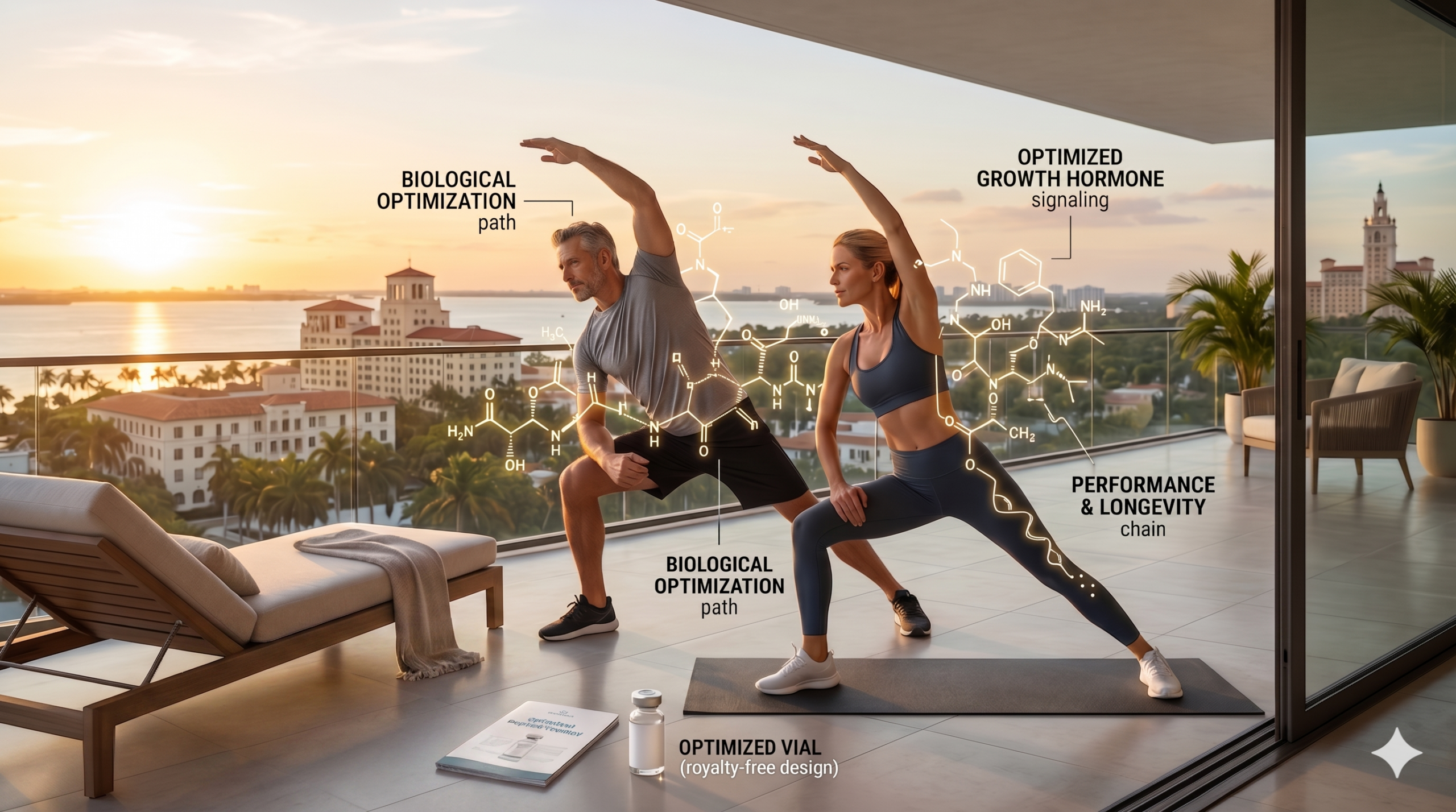
Peptide Therapy in Miami | PURE Executive Health & Wellness
Targeted Biological Optimization for Recovery, Performance & Longevity
At PURE Executive Health & Wellness in Coral Gables, we offer physician-supervised peptide therapy designed to accelerate tissue repair, optimize growth hormone signaling, and enhance recovery. This article will cover the fundamentals of peptide therapy, the science behind how peptides work, the most effective protocols we offer, who can benefit, and what to expect from your personalized treatment journey at PURE. We’ll also address frequently asked questions and explain why our approach stands out in Miami’s competitive wellness landscape.
Our target audience includes high-performing executives, athletes, individuals seeking faster recovery from injury or surgery, and anyone interested in anti-aging or optimizing their health. Miami is a city known for its active lifestyle, demanding professional schedules, and a culture that values both performance and longevity. At PURE, we combine cutting-edge science with personalized care, making peptide therapy especially relevant for those who want to stay at the top of their game in this vibrant environment.
What Are Peptides and Amino Acids — And Why Are They Transforming Medicine?
Peptides are short chains of amino acids — the same building blocks your body naturally produces — that serve as vital biological messengers. Peptide therapy involves the use of synthetic peptides, and thousands of peptide variations regulate a massive array of bodily systems, including metabolism, muscle growth, collagen production, and many different types of repair processes that support the body’s ability to function well. These molecules instruct cells, tissues, and organs on how to function, regulating essential processes from metabolism to tissue repair. Many of the body’s crucial hormones are peptides, such as insulin, which is a 51-amino-acid peptide.
Unlike broad-spectrum pharmaceuticals, peptide therapy uses synthetic peptides that bind to specific receptors and pathways, triggering focused responses like muscle recovery or fat loss with remarkable specificity and minimal side effects.
It’s important to distinguish between endogenous and exogenous peptides. Endogenous peptides are manufactured naturally within your cells from an RNA template transcribed from DNA, controlling day-to-day survival mechanisms and maintaining health. Exogenous peptides, on the other hand, are introduced from outside the body and can come from dietary sources, skincare products, or synthetic medications like those used in peptide therapy.
For high-performing executives, athletes, and those seeking optimal health, peptide therapy bridges the gap between conventional medicine and peak performance. Whether you’re recovering from a sports injury, seeking to reverse age-related decline in growth hormone, or looking to accelerate healing after a procedure, peptides offer a targeted, evidence-based approach that works with your body’s own biology.
Now that you understand the basics, let’s explore some of the most effective peptide protocols we offer.
Some of Our Favorite Peptide Protocols
BPC-157 (Body Protection Compound)
The Regeneration Peptide
BPC-157 is a 15-amino-acid peptide originally derived from human gastric juice. It has demonstrated remarkable healing properties across multiple tissue types — tendon, ligament, muscle, bone, and gastrointestinal lining. Research shows it helps form new blood vessels, speeds recovery in damaged tissues, and suppresses inflammation by modulating growth factor expression and supporting the nitric oxide system, supporting its use as a regenerative treatment.
At PURE, we prescribe BPC-157 for members recovering from musculoskeletal injuries, post-surgical healing, chronic tendinopathies, and GI conditions including leaky gut and inflammatory bowel symptoms.
Benefits:
- Tendon & ligament repair
- Post-surgical recovery
- Gut healing
- Anti-inflammatory effects
- Muscle recovery
Transitioning from the regenerative power of BPC-157, let’s look at how we optimize growth hormone signaling for anti-aging and performance.
CJC-1295 / Ipamorelin
The Growth Hormone Optimizer
This synergistic combination is the gold standard for growth hormone optimization without the risks of exogenous HGH, and peptide therapy is commonly used by athletes to support muscle growth and recovery as well as by individuals focused on overall health and wellness. CJC-1295 is a growth hormone-releasing hormone (GHRH) analog that extends the natural GH pulse, while Ipamorelin is a selective growth hormone secretagogue that signals the pituitary gland to release stored growth hormone with precision, supporting muscle protein synthesis and bone density without the cortisol or prolactin spikes associated with other GH peptides.
Together, they amplify your body’s natural growth hormone production; for example, broader peptide-therapy effects can include fat loss, improved sleep, skin health, and better immune function, though this protocol is primarily used to support:
- Lean muscle growth
- Fat metabolism
- Deep restorative sleep
- Skin elasticity
- Recovery
- Anti-aging benefits
Having explored growth hormone optimization, let’s move on to peptides that accelerate tissue repair and healing.
Thymosin Beta-4 (Tβ4)
The Tissue Repair Accelerator
Thymosin Beta-4 is a naturally occurring peptide present in virtually all human cells and tissues. It plays a central role in tissue repair by promoting cell migration, reducing inflammation, and stimulating new blood vessel formation. Preclinical and clinical research has demonstrated its efficacy in wound healing, corneal repair, and cardiac tissue recovery.
At PURE, we utilize Tβ4 for members with acute soft tissue injuries, post-operative healing needs, and chronic inflammatory conditions where accelerated tissue repair is the primary objective.
Benefits:
- Wound healing
- Anti-inflammatory effects
- Cell migration
- Cardiac support
- Corneal repair
With an understanding of our core peptide protocols, let’s discuss who stands to benefit most from these innovative therapies.
Who Benefits from Peptide Therapy?
Active Executives & Athletes
- Accelerate recovery from training, travel fatigue, and soft tissue injuries.
- Maintain peak physical performance while managing a demanding schedule.
Post-Surgical Recovery
- Enhance tissue healing after orthopedic procedures, cosmetic surgery, or dental work.
- BPC-157 and Tβ4 can significantly reduce recovery timelines.
Age-Related GH Decline
- Growth hormone production drops approximately 14% per decade after age 30.
- CJC-1295/Ipamorelin restores youthful GH pulsatility without exogenous HGH.
Chronic Tendon & Joint Issues
- Tennis elbow, rotator cuff tendinopathy, plantar fasciitis, and other chronic conditions respond well to targeted peptide protocols.
Gut Health Optimization
- BPC-157’s gastroprotective properties make it a powerful tool for addressing leaky gut, IBS symptoms, and intestinal inflammation.
Now that you know who can benefit, let’s walk through what to expect from your peptide therapy journey at PURE.
Your Peptide Therapy Journey at PURE
Before starting any peptide regimen, it is highly recommended to consult a medical professional to ensure treatments are safe and appropriate for your individual needs.
Comprehensive Evaluation
Your physician conducts a detailed health history, reviews your goals, and, with a qualified provider, evaluates any underlying medical condition before starting a peptide regimen to confirm the protocol is safe and appropriate. Baseline labs are ordered, including IGF-1, inflammatory markers, metabolic panel, and hormone levels to identify the optimal peptide protocol for your needs.
Personalized Treatment Plan
Based on your lab results and clinical presentation, your PURE physician designs a tailored peptide protocol — selecting specific peptides, dosing schedules, delivery methods, and complementary therapies.
Pharmaceutical-Grade Sourcing
All peptides are sourced from licensed US compounding pharmacies that follow current Good Manufacturing Practices (cGMP). You receive pharmaceutical-grade formulations — never research-grade or unregulated products.
Peptide Injections
Our clinical team walks you through proper reconstitution, storage, and self-administration technique. Most subcutaneous injections use ultra-fine insulin needles and are virtually painless, helping the treatment reach the bloodstream efficiently for maximum efficacy. Peptide injections are generally considered safe when administered by a trained health care professional, though mild redness or swelling at the injection site, as well as temporary headaches or digestive discomfort, can occur and usually resolve after a short period.
Ongoing Monitoring
Follow-up labs at 6 and 12 weeks assess your response. Many people notice progress within a few weeks, while full results often take a few months, especially when paired with a healthy lifestyle. Serious side effects are rare and should be discussed with your supervising healthcare provider during follow-up. Your physician adjusts dosing, cycles peptides as needed, and ensures your protocol continues to align with your evolving goals.
With a clear understanding of the process, let’s dive into the scientific evidence supporting peptide therapy.
The Science Behind Peptide Therapy
BPC-157: Consistent Healing Across Tissue Types
A comprehensive review published in Cell and Tissue Research (2019) concluded that BPC 157 has demonstrated “consistently positive and prompt healing effects for various injury types, both traumatic and systemic and for a plethora of soft tissues.” The review noted BPC-157’s potential as a conservative therapy for hypovascular tissues such as tendons and ligaments, with few reported adverse reactions across all studies examined.
A 2021 review in Frontiers in Pharmacology further established BPC-157’s practical applicability, noting its effectiveness at the same dose range regardless of injury type, with healing accomplished through resolution of vessel constriction, platelet stabilization, and rapid upregulation of various gene expressions in wound tissue.
Thymosin Beta-4: From Bench to Bedside
Research published in the Annals of the New York Academy of Sciences reviewed Thymosin β4’s multiple biological activities, including down-regulation of inflammatory chemokines, promotion of cell migration, blood vessel formation, and stem cell maturation. These findings formed the scientific foundation for ongoing dermal, corneal, and cardiac wound repair clinical trials.
Armed with scientific validation, let’s see why PURE is the trusted choice for peptide therapy in Miami.
Why Choose PURE for Peptide Therapy
The peptide therapy landscape is fragmented — from unregulated online vendors to med spas offering peptides without genuine medical oversight. Here’s what sets PURE apart:
| Typical Online or Med Spa Peptide Programs | PURE Executive Health & Wellness |
|---|---|
| Peptide sourcing and quality standards may vary by provider. | Pharmaceutical-grade peptides sourced through licensed U.S. compounding pharmacies. |
| May not include a comprehensive physician evaluation or laboratory testing before treatment. | Comprehensive physician evaluation with laboratory testing before treatment begins. |
| Standardized treatment protocols may be used. | Individualized dosing based on your medical history, laboratory results, and clinical goals. |
| Follow-up monitoring varies by provider. | Scheduled follow-up visits and laboratory monitoring at approximately 6 and 12 weeks, when clinically appropriate. |
| Medication interaction review may be limited. | Comprehensive review of current medications and potential interactions. |
| Compounding pharmacy standards vary depending on the provider. | Medications obtained through licensed cGMP-compliant U.S. compounding pharmacies. |
| Treatment may be provided as a standalone service. | Integrated into a comprehensive concierge and preventive health program. |
With PURE, you receive a level of safety, personalization, and integration that generic sources simply cannot match.
Now, let’s address some of the most common questions about peptide therapy.
Frequently Asked Questions
What is peptide therapy?
Definition
Peptide therapy uses short chains of amino acids — naturally occurring signaling molecules — to trigger specific biological responses in your body, including immune defense and metabolic signaling. Unlike synthetic drugs, peptides work with your body’s existing systems to enhance tissue repair, optimize growth hormone production, reduce inflammation, and support recovery, and some can even cross the blood-brain barrier to influence neurotransmitter activity and brain plasticity. At PURE, all peptide protocols are physician-supervised and tailored to your individual health goals.
Is peptide therapy safe?
Safety
When administered under proper medical supervision with appropriate dosing and monitoring, peptide therapy has demonstrated a strong safety profile. BPC-157 has shown no reported toxicity in preclinical studies, and growth hormone secretagogues like CJC-1295/Ipamorelin work by stimulating your body’s own natural production rather than introducing exogenous hormones. Some are also beneficial for immune support, such as antimicrobial peptides that target harmful bacteria, fungi, and viruses and Thymosin Alpha-1, which upregulates T-cell activity against foreign pathogens. At PURE, we use only pharmaceutical-grade peptides from licensed compounding pharmacies and monitor all members through regular lab assessments.
How are peptides administered?
Administration
Peptides can be administered via subcutaneous injection, oral capsules, topical creams, or nasal sprays depending on the specific peptide and clinical indication, and some are also widely available as oral supplements or topical cosmetic products used to counteract the breakdown of structural proteins with age. Most protocols at PURE involve small subcutaneous injections using insulin-type needles, which are virtually painless. Our clinical team provides thorough training on self-administration technique during your initiation appointment.
How long does it take to see results from peptide therapy?
Results Timeline
Timelines vary by peptide and indication. BPC-157 users often notice reduced pain and improved recovery within 1 to 2 weeks, which can be especially helpful for people dealing with persistent injuries. CJC-1295/Ipamorelin members typically experience improved sleep quality within the first week, with body composition changes becoming noticeable over 8 to 12 weeks. Full optimization with growth hormone peptides generally occurs over 3 to 6 months of consistent use.
Can peptide therapy be combined with other treatments?
Combination with Other Treatments
Absolutely. Peptide therapy integrates well with hormone optimization, IV therapy, and comprehensive wellness programs. Many of our members use BPC-157 alongside their testosterone optimization protocol, or combine CJC-1295/Ipamorelin with their nutrition and exercise programming for amplified results. In some cases, physician-supervised plans may also include Glucagon-Like Peptide-1 (GLP-1) Agonists, which mimic gut hormones to increase insulin secretion and curb appetite; peptides like GLP-1 are released by the gut to help manage blood sugar and signal fullness. Your PURE physician coordinates all therapies to ensure safety and synergy.
What is the difference between peptide therapy at PURE vs. online peptide sources?
PURE vs. Online Sources
Online peptide sources are unregulated and carry significant risks including contamination, incorrect dosing, and unknown purity. At PURE, all peptides are sourced from licensed US compounding pharmacies that follow FDA guidelines, prescribed by a physician after comprehensive evaluation, dosed based on your specific lab work and health profile, and monitored through ongoing follow-up. Your health is not a place to cut corners.
Unlock Your Body’s Repair Potential
Whether you’re optimizing recovery, reversing age-related decline, or pursuing peak performance, physician-supervised peptide therapy at PURE delivers targeted results grounded in science.
Clinical References
- Gwyer D, Wragg NM, Wilson SL. Gastric pentadecapeptide body protection compound BPC 157 and its role in accelerating musculoskeletal soft tissue healing. Cell Tissue Res. 2019;377(2):153-159. doi:10.1007/s00441-019-03016-8
- Seiwerth S, Milavic M, Vukojevic J, et al. Stable Gastric Pentadecapeptide BPC 157 and Wound Healing. Front Pharmacol. 2021;12:627533. doi:10.3389/fphar.2021.627533
- Seiwerth S, Rucman R, Turkovic B, et al. BPC 157 and Standard Angiogenic Growth Factors. Gastrointestinal Tract Healing, Lessons from Tendon, Ligament, Muscle and Bone Healing. Curr Pharm Des. 2018;24(18):1972-1989. doi:10.2174/1381612824666180712110447
- Philp D, Kleinman HK. Animal studies with thymosin beta 4, a multifunctional tissue repair and regeneration peptide. Ann N Y Acad Sci. 2010;1194:81-86. doi:10.1111/j.1749-6632.2010.05479.x
- Sosne G. Thymosin beta 4 and the eye: the journey from bench to bedside. Expert Opin Biol Ther. 2018;18(sup1):99-104. doi:10.1080/14712598.2018.1486818